Part 3: When
This is the third part in my planning a garden series. You can check out parts one and two by clicking the links below.
When
When do I need to plant my garden? I see this question all the time in gardening groups, especially in the winter months. The answer truly is it depends.
- It depends on where you are located. Knowing your hardiness zone is not enough. You have to know your first and last frost dates.
- It depends if you are planting a cool-season or warm-season crop. This determines when it can be planted outside based on your frost dates.
- It depends if that crop can be directly seeded, transplanted, or both. You have to know, though, which it prefers.
1. How to find your first and last frost dates
The first frost date refers to the first frost after the summer season and the last frost date is the last frost in the spring. It is important to know your first and last frost dates because otherwise your plants will either never grow or they will die prematurely. Unless, of course, you blindly guess right and your garden is a smashing success. If that’s the case, you should play the lottery more often.
Here is a news flash: No one can predict the weather with 100% accuracy. Surprise! What’s that saying about meteorologist being wrong 80% of the time but still keep their jobs. I jest but there is truth to not knowing what the weather will be in the future. Especially, months away.
The absolute best way to know your frost dates in your own backyard is to start recording them yourself year after year. If you’re anything like me, I haven’t done that in the past. I have started, though.
Here is a link to a website that gives an approximation of your frost dates. Just know that they state that their dates are a 30% probability. The site says my last frost date is April 2 and first is November 3. Last year, the first frost was spot on, but the last frost date was more than 2 weeks late. Because of this, my garden last year looked like a camping site while I covered my tender warm-season crops.
I now plan for April 15 for my last frost date and will adjust it as needed. I’m not a commercial grower who needs their vegetables as early as possible. So waiting 2 weeks is okay to me. With that said, I did invest in row covers to place over my warm-season crops to protect them from last season frosts if my predictions are not correct.
I also need to mention that your garden may have its own micro-climate. Your neighbor, who may only be a few houses away, can have success growing a particular crop compared to you. Their garden may be out in the open with wind and lots of sunlight or up against a brick wall with higher temperatures. These factors change the environment your plants grow in and, therefore, how successful and abundant it is, even with the same frost dates.
Cool-Season and Warm-Season Plants
Vegetables and other plants are either cool-season or warm-season crops. Certain crops can be and should be planted before your last frost date and certain crops should be planted after.
If you plant a cool-season crop in the warm-season, then don’t expect it to do well and visa versa. In my first year gardening, I direct sowed peas in May. May is warm here and the peas germinated and grew quickly. I was delighted and enjoyed my first couple of sugar snaps. Once June hit (psst…June gets hot here in South Carolina), the peas started to die. I thought myself a bad gardener, thinking I did something wrong with the soil or watering. It wasn’t until a couple of years later that I learned peas are cool-season crops and I simply planted them too late in the season.
Examples of Cool-Season and Warm-Season Crops
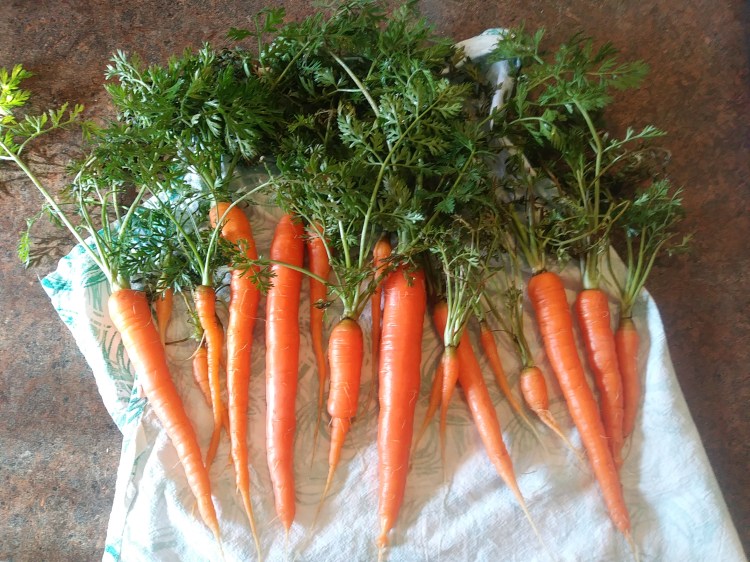
Cool-Season Crops
- Beets
- Broccoli
- Brussels sprouts
- Cabbage
- Carrot
- Cauliflower
- Celery
- Collards
- Garlic
- Kale
- Kohlrabi
- Leek
- Lettuce
- Mustard
- Onion
- Pea
- Potato
- Radish
- Spinach
- Swiss Chard
- Turnip
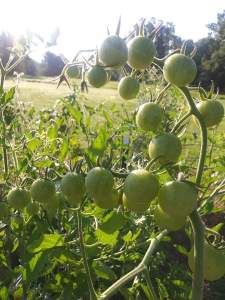
Warm-Season Crops
- Cucumber
- Eggplant
- Lima Bean
- Okra
- Pepper
- Pumpkin
- Snap Bean
- Squash
- Sweet corn
- Sweet potato
- Tomato
- Watermelon
Dates to plant
If you live in South Carolina or even if you don’t, visit the Clemson Cooperative Extension’s Home and Garden Information Center (HGIC) website. They have numerous fact sheets on gardening which provides you with more information than you know what to do with.
Check out this HGIC fact sheet on planning a garden. Once you find your region, check out the planting dates for your garden vegetables. They give a wide range of times for both spring and fall plantings. These are guidelines and once you gain more gardening experience in your backyard, you will be able to narrow the time frame for each crop. It also gives suggested plant spacing for several crops.
Another planting calendar is this one from The Old Farmer’s Alamac. After you enter in your zip code, it gives you the spring and fall planting dates. It also gives dates to start your seeds indoors as well as dates for planting by the moon. Yes, you read that right, the moon. It’s an old technique of planting which people believe grows bigger and tastier crops. I have never tried it but it is worth learning about.
I have created my own planting calendar for the area I live in. It is a work in progress but I do look forward to sharing it with you all.
Direct Seed or Transplants
The following crops are better directly sown into garden beds because root disturbance hinders growth:
- Beans
- Beets
- Carrots
- Corn
- Peas
Crops that can be transplanted but need special care:
- Celery
- Chard
- Cucumbers
- Melons
- Pumpkins
- Spinach
- Squash
Crops that are easily transplanted into the garden:
- Broccoli
- Brussels sprouts
- Cabbage
- Cauliflower
- Eggplant
- Kale
- Lettuce
- Onion
- Okra
- Pepper
- Sweet potato slips
- Tomato
Please know that these are suggestions. I have successfully transplanted peas.
Also know it is possible to direct sow the crops on the transplant list. Some crops take a long time to fruit so gardeners begin seeds indoors to get a jump start on their growth. Here in South Carolina, it gets too hot too fast for some crops. In the north, it gets too cold too fast. Seed packets will list how long it takes crops to mature from either transplants or direct seeding. So take note of it and use your last frost date to determine if you can direct sow or need transplants.
 Blooms for Life Farm